


Rubik's Cube is a 3-D twisty puzzle invented in 1974[1] by Hungarian sculptor and professor of architecture Ernő Rubik. Originally called the "Magic Cube",[2] the puzzle was licensed by Rubik to be sold by Ideal Toy Corp. in 1980[3] via German businessman Tibor Laczi and Seven Towns founder Tom Kremer,[4] and won the German Game of the Year special award for Best Puzzle that year. As of January 2009, 350 million cubes had been sold worldwide[5][6] making it the world's top-selling puzzle game.[7][8] It is widely considered to be the world's best-selling toy.[9]
In a classic Rubik's Cube, each of the six faces is covered by nine stickers, each of one of six solid colours (traditionally white, red, blue, orange, green, and yellow).[10] A pivot mechanism enables each face to turn independently, thus mixing up the colours. For the puzzle to be solved, each face must be returned to consisting of one colour. Similar puzzles have now been produced with various numbers of stickers, not all of them by Rubik.
Although the Rubik's Cube reached its height of mainstream popularity in the 1980s, many speedcubers continue to practise it and other twisty puzzles and compete for the fastest times. Its international governing body, the World Cube Association, has organised competitions and kept the official world records since 2003 ...
http://en.wikipedia.org/wiki/Rubik%27s_Cube
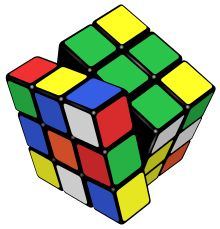
Rubikovu kostku lze z každé pozice složit 26 tahy:
Zajímavé je, že podle Wiki není většina dosavadních důkazů týkajících se kostky konstruktivních, tj. neuvádějí řešení, jak kostku složit. Podle tiskové zprávy Northeastern University nový důkaz ale naopak konstruktivní je: program, které napsali, skutečně prošel všechny pozice kostky a ukázal, jak je lze složit v 26 tazích. Řešení bylo dosaženo hrubou silou díky výkonnému hardwaru (7TB distribuovaný disk jako rozšíření RAM) a optimalizovaným algoritmům. Všechny pozice byly rozděleny do určitých skupin konfigurací, na které pak šlo aplikovat stejný postup a zjistit jeho výsledek pro všechny konfigurace. Optimalizace spočívala hlavně v předpočítávání, kdy se nejprve příslušná konfigurace poměrně dlouho analyzovala, aby se zjistilo, do jaké skupiny patří. Vlastní složení pak už bylo velmi rychlé. Matematický aparát, ze kterého se při této úloze vychází, je teorie grup ...
http://scienceworld.cz/matematika/rubik ... 6-tahy-979
 ) a jako spolehlivého zabijáka nudy ...
 Dokonce je tu několik obchodů, s rozdílnými cenami, akcemi, množstvím, dokonce možnost výměny / koupě od sběratelů. A navíc je tu jeden e-shop, který je velmi profesionální, s různorodou podivuhodnou a největší nabídkou, kde dokonce budete mít problém si vybrat, protože jsou tam na pohled (ale ne vždy vlastnostmi) stejné výrobky od mnoha zavedených výrobců, mezi nimiž nechybí Rubikovo studio nebo například Uwe Meffert (Pyraminx, Dodecahedron / dvanáctistěn alias Megaminx, ... vyrábí v Hong Kongu). Majitelem e-shopu je speedcuber (skládání exonixů na rychlost), který vám i odborně poradí.


 I když jsem v době největšího rozmachu kostky v Československu nebyl ještě naživu, několik lidí z této éry přeci jenom znám.
